
Can you cycle in barefoot trainers? Check your flat pedals first
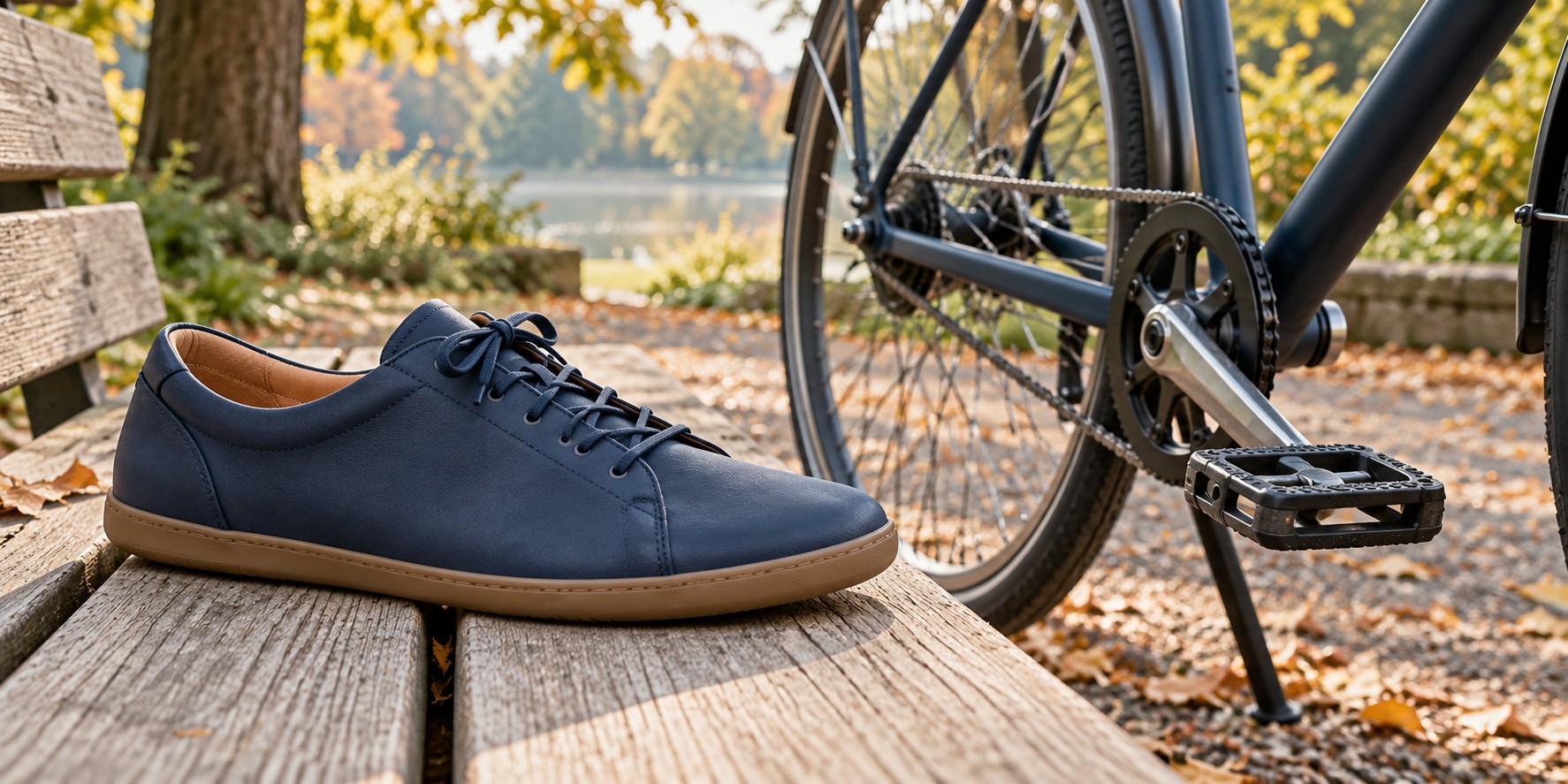
Whether barefoot trainers suit cycling depends on the actual shoes, pedals and riding you plan. Walking comfort does not establish pedalling comfort. Start with the footwear’s intended use and the pedal maker’s instructions.
Identify the pedal type
- Flat pedals: need stable sole contact with the platform and reliable grip. A thin flexible sole may let you feel a narrow contact area more strongly.
- Clip-in pedals: require compatible cycling shoes and cleats. Do not try to adapt an ordinary trainer to the mechanism.
- Toe clips and straps: check toe room and quick foot release. Do not force a broad shoe into a cage.
Check before setting off
With the bicycle securely supported, check the shoe’s position on the pedal and clearance from the crank. The sole should not slip or fold markedly over the platform edge. With sharp pedal pins, check material compatibility in the makers’ guidance and watch for sole damage.
Tie the laces and secure loose loops and ends away from the chain and cranks. Practise starting and stopping on level ground away from traffic. A dry check does not establish wet grip.
When to choose different footwear
Do not use the combination if you feel concentrated pedal pressure, slipping or contact with moving parts. For long or technical rides, choose footwear intended for the pedal setup. Ask a bike shop to assess compatibility if uncertain.
Walking after dismounting
For trainers used on foot, check size and heel retention. The linked city model is not a confirmation of cycling compatibility with your own pedals.
For a new pair, compare measurements with the size table. Explore the barefoot sneakers, including Antal Amada Navy Blue. Check availability in your size.