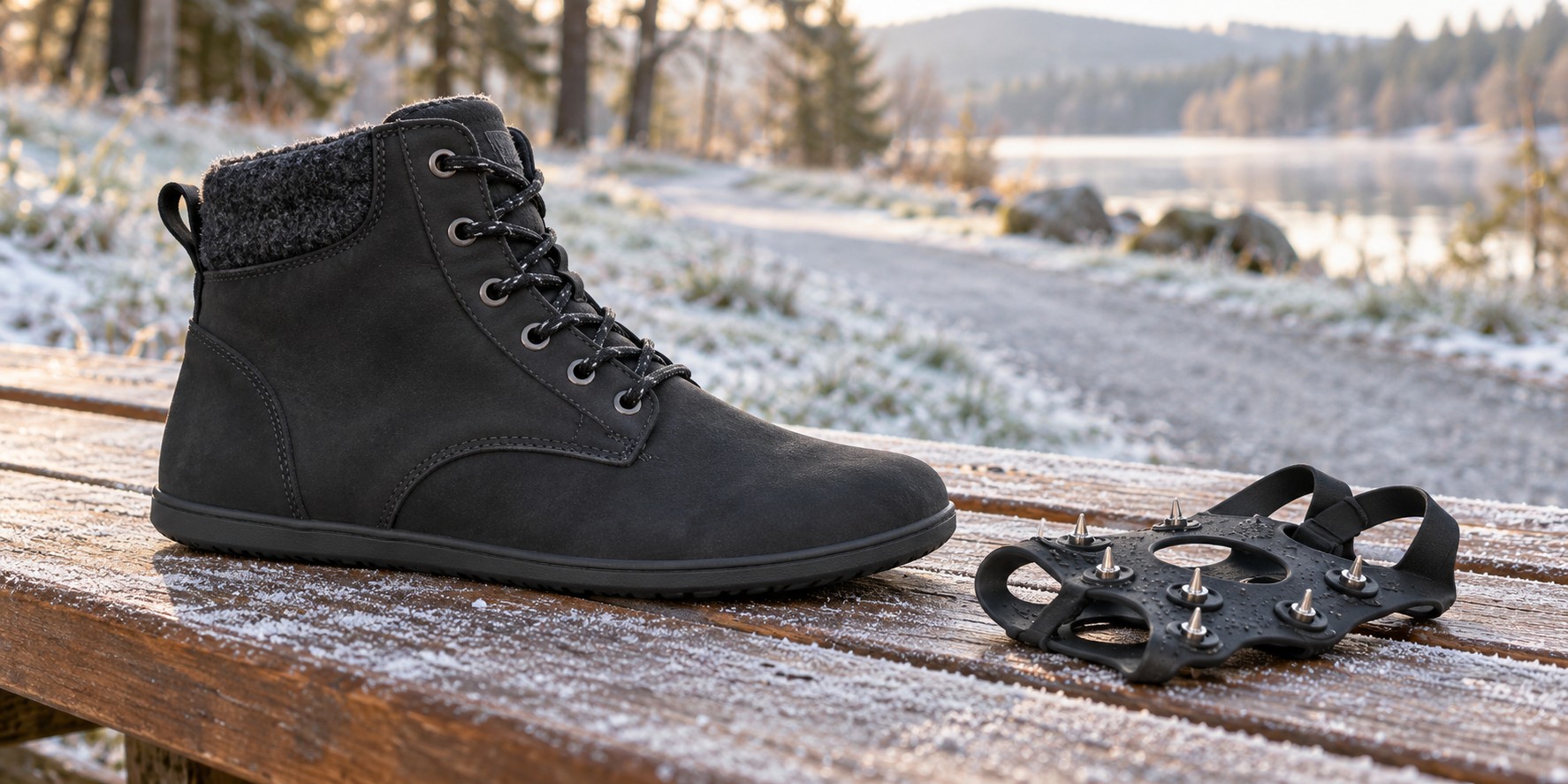
Barefoot shoes slipping on ice? Check grip and traction
Winter footwear can slip on ice. Neither the barefoot label nor a tread pattern guarantees traction on smooth ice. Check the conditions and your own needs before setting out. Insp...
We use cookies to make browsing our website comfortable and, through analysis, continuously improve its features, performance and usability. More information

Winter footwear can slip on ice. Neither the barefoot label nor a tread pattern guarantees traction on smooth ice. Check the conditions and your own needs before setting out. Insp...

Whether barefoot trainers suit cycling depends on the actual shoes, pedals and riding you plan. Walking comfort does not establish pedalling comfort. Start with the footwear’s inte...

Do not choose leather shoe cream by the colour in the jar alone. Identify your shoe’s finish and check its care instructions first. The word barefoot does not determine how the lea...

Grey laces do not mean your entire leather trainer needs a soak. Remove the laces and clean them separately. This method is for ordinary textile laces whose care instructions allow...

A shoe size or six eyelet pairs cannot give one exact lace length. The gap between the sides, your instep and your lacing pattern all affect the result. Start with a lace that alre...

A flexible barefoot sole can make rolling your sneakers into a small gap seem tempting. Flexibility while walking is not permission to fold the leather upper in half. Unless the in...

Barefoot trainers can work for a wedding guest when the couple welcomes them and the dress code permits them. A wide toe box and flat sole do not automatically make a shoe suitable...

A clicking sound after walking on gravel may come from a pebble caught in the outsole. Take the shoe off and look underneath before scraping it against the pavement. The stone may ...

Stepped in chewing gum? Rubbing the sole on a pavement can push it deeper into the tread. With leather barefoot sneakers, work only on the affected area and check the care instruct...
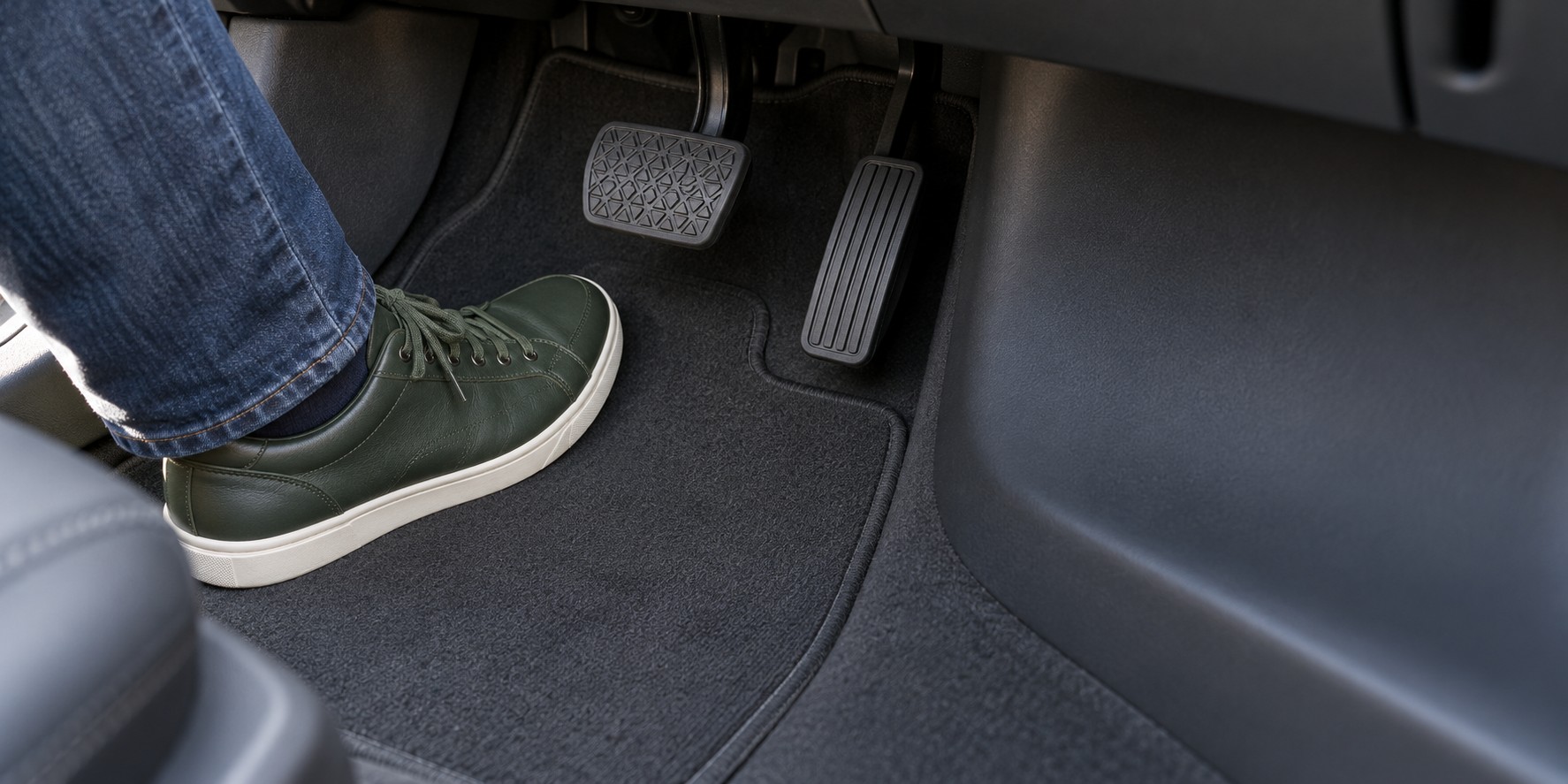
People looking for driving shoes often focus on how thin a sole feels. The practical question is whether a particular pair stays on your foot and lets you operate your own car’s pe...

A slipper that opens during nursery play is inconvenient, but the fastening may simply be full of lint. Hair and fibres can lodge between the small hooks. Another possibility is th...

Standing through a shift on a hard floor feels different from walking to the office. Barefoot sneakers may suit some everyday workplaces, but a roomy toe box alone cannot tell you ...
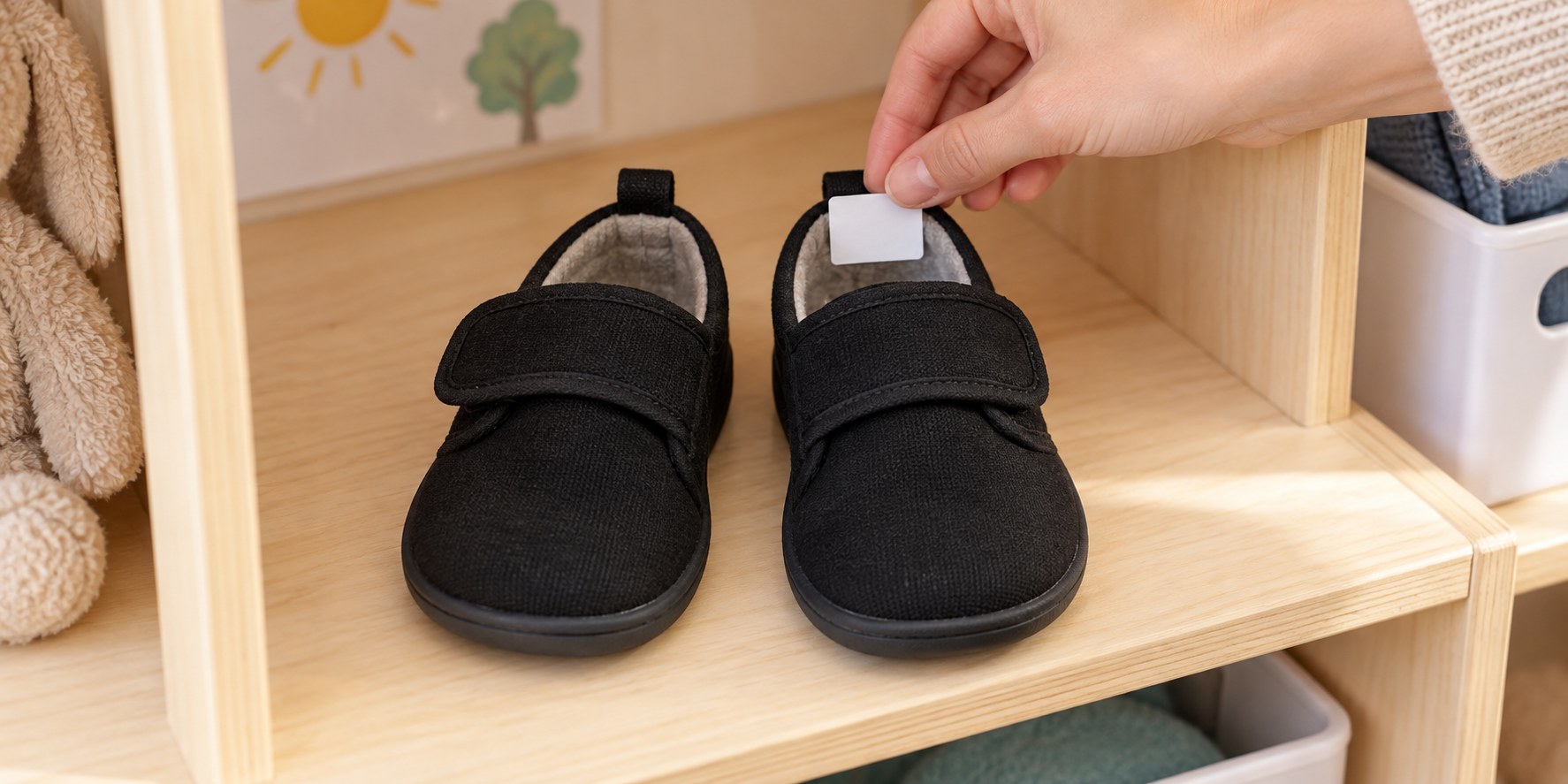
Similar slippers can be mixed up in a busy nursery cloakroom. A clear name helps adults return a lost shoe and helps a child recognise their own pair. First ask whether the nursery...

A sneaker that rubs the ankle is not always a shoe that needs more breaking in. First locate the contact point and watch what happens to your heel as you walk. Three quick fit che...

A cold, short wash may sound harmless, but a washing machine exposes a leather sneaker to water, detergent and repeated tumbling at the same time. Those forces can affect the upper...

When a leather sneaker gets soaked, do not judge dryness by its upper alone. The lining and the space beneath the footbed may still hold moisture after the outside feels dry. A few...

Laces that undo halfway through a walk are frustrating and can get underfoot. First find out whether only the bow loosens or the entire lacing gradually loses tension. Repeated ste...

A mark on a pale sock after wearing your shoes can have several sources. Before treating the whole pair, work out which surface touches the stain: the insole, heel lining, collar o...

A small worn patch inside the heel can become a hole while the outer shoe still looks sound. Before adding a patch, check whether only the soft lining is affected or the firmer hee...

A line across the front of a new leather sneaker can appear after only a few walks. The upper bends as your foot moves, so a soft crease is usually ordinary wear. What matters is w...