
One child’s foot is bigger: which slipper size should you choose?
Have you measured both of your child’s feet and found different lengths? A small left-to-right difference is common. The useful question when buying slippers is whether the longer foot has enough room while the shorter foot stays secure. Age or the size of an old pair is a poor substitute for measuring.
Measure the left and right foot separately
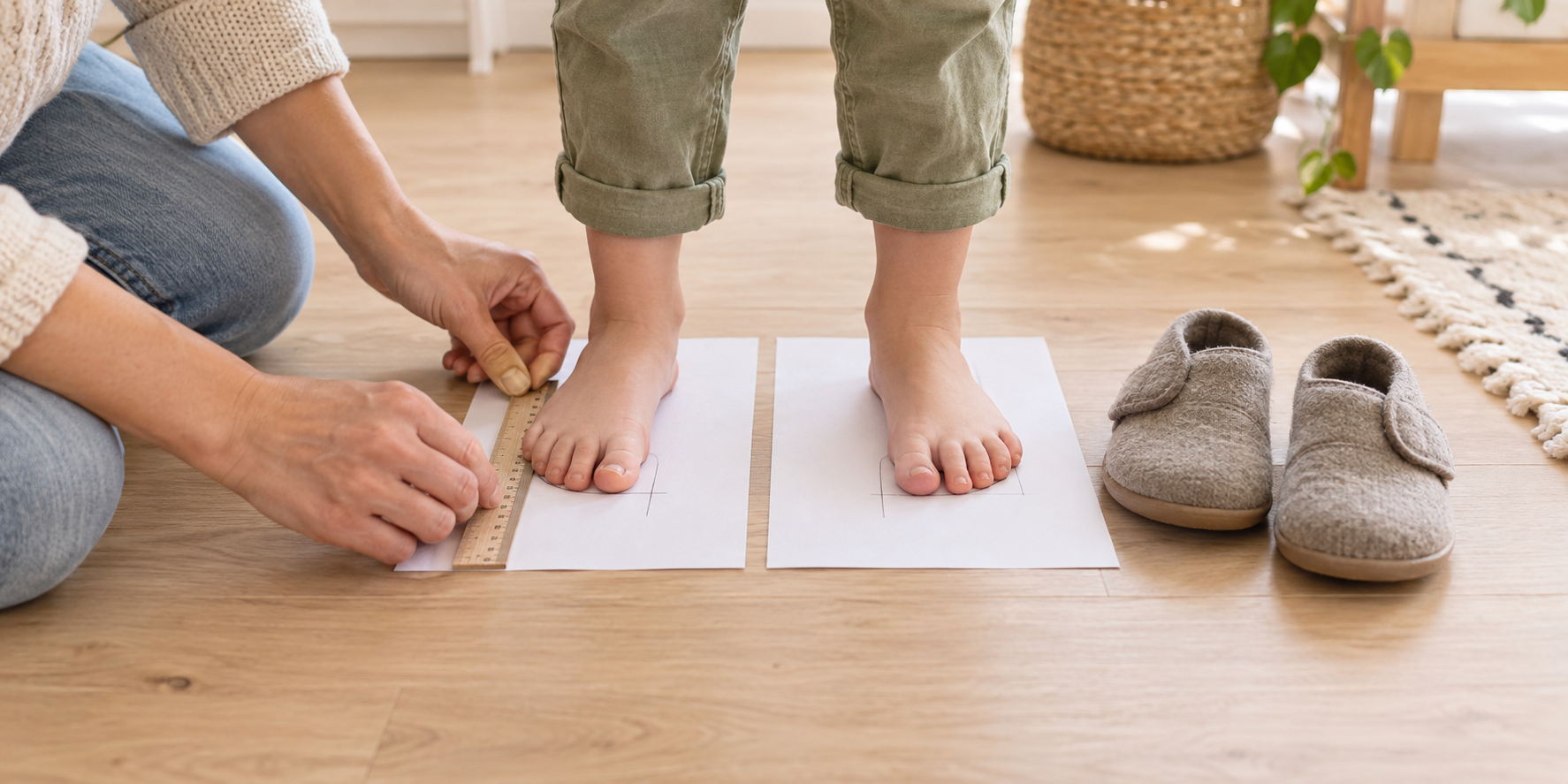
- Have your child stand on paper wearing the socks they will use with the slippers.
- Mark the heel and the longest toe of each foot, then measure in millimetres. The big toe is not always the longest.
- Write down both lengths and check the forefoot width. Repeat the measurement if the difference seems surprising.
Compare the larger measurement with the Antal size chart for the model you want. The number printed on a shoe does not tell you exactly how much usable space is inside it.
Which foot sets the size?
For a matching pair, start with the longer foot. Its toes should not touch the end when your child walks. Then check the shorter foot: the heel should stay in place rather than lifting out. If that slipper is slightly loose, adjust the fastening. Do not choose a short pair just to secure the smaller foot.
Try both slippers while walking
Fasten both slippers and ask your child to walk, turn and climb a few steps. Look for heel movement, tripping, curled toes and red pressure marks after taking them off. If one side still pinches while the other slips, a different shape may work better than simply sizing up.
Explore children’s slippers and the adjustable Rascal Unicorn slippers. Check the size chart and test both feet after delivery before deciding to keep a pair.
When to seek advice
If the difference is large, has appeared suddenly, or comes with pain, swelling or limping, speak to a healthcare professional. New slippers cannot explain those symptoms on their own.