
Barefoot shoe sole thickness: what do the millimetres mean?
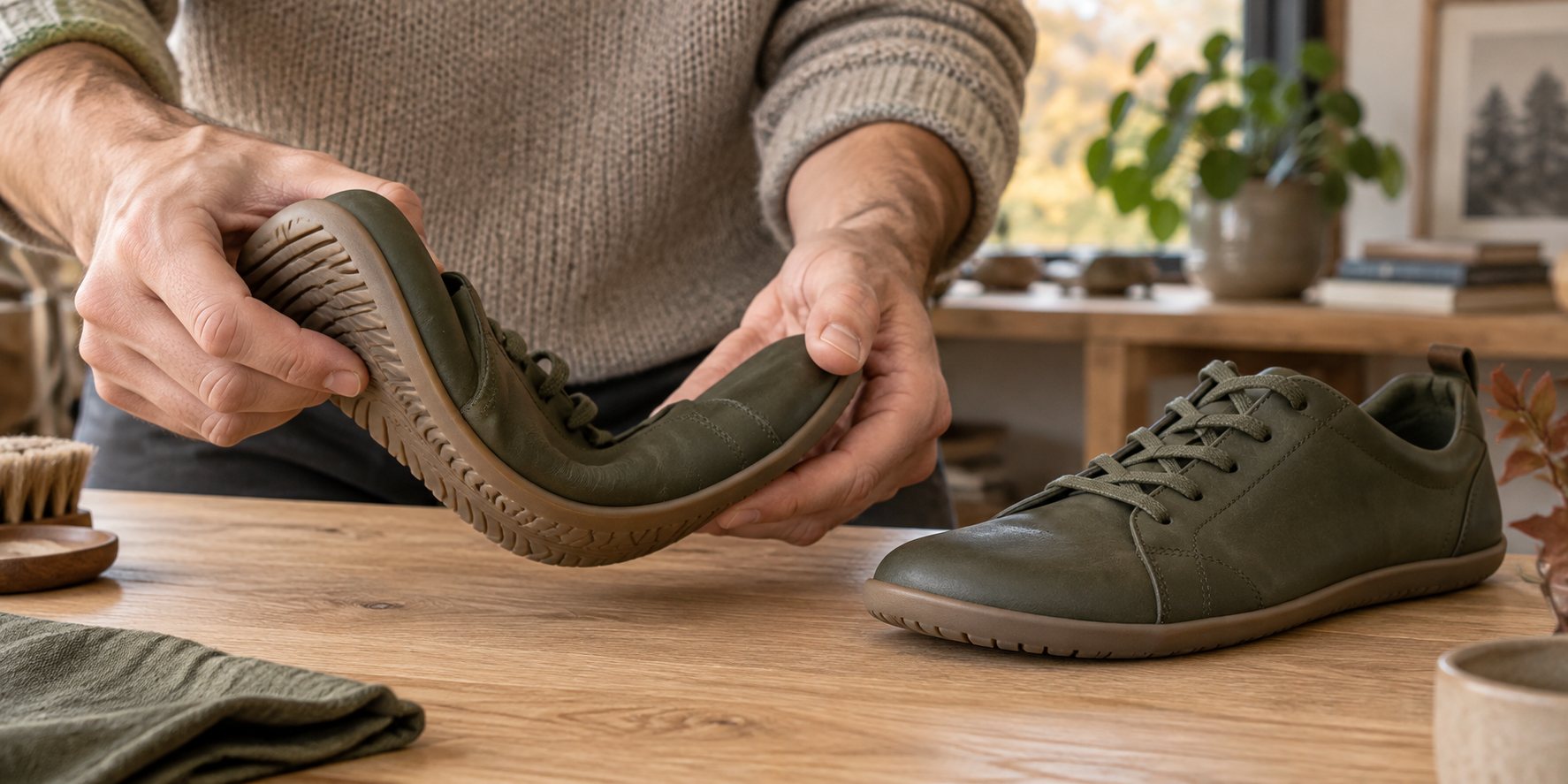
A barefoot shoe listing may say 4 mm, 6 mm or another figure. Before comparing numbers, check what was measured. An outsole, its tread and any layer under your foot can be described separately, so a single figure does not tell the whole story.
Three measurements people often mix up
- The rubber outsole is the continuous base. Tread lugs are the raised pattern beneath it; their height may be listed separately.
- An insole or sewn-in soft layer can change how much of the surface you feel. Compare like with like by checking which layers the product specification includes.
- Zero drop describes the height difference between heel and forefoot. It does not tell you how thick the whole sole is.
Choosing for your everyday surface
- For smooth city pavements, look at flexibility and a tread suited to that setting. For uneven paths, also consider the profile underfoot.
- A thinner, more flexible construction usually lets you notice more of the ground. Material firmness, tread and an inner layer also affect the result.
- Try a short walk on a safe firm surface. If the sensation is uncomfortable, choose a feel that suits you and build up wear gradually.
A real product example
Amada Tea Green lists a flexible 4 mm rubber outsole plus 2 mm tread, with a sewn-in 2 mm functional foam layer. These figures explain the construction; adding them together is not a universal measure of comfort or ground feel. Fit and flexibility still matter.
Before ordering, compare internal length and width in the size chart. barefoot sneakers: Amada Tea Green is a concrete model whose sole specification you can compare with your preferred underfoot feel.