
Why do barefoot shoes squeak when walking? A simple way to find out
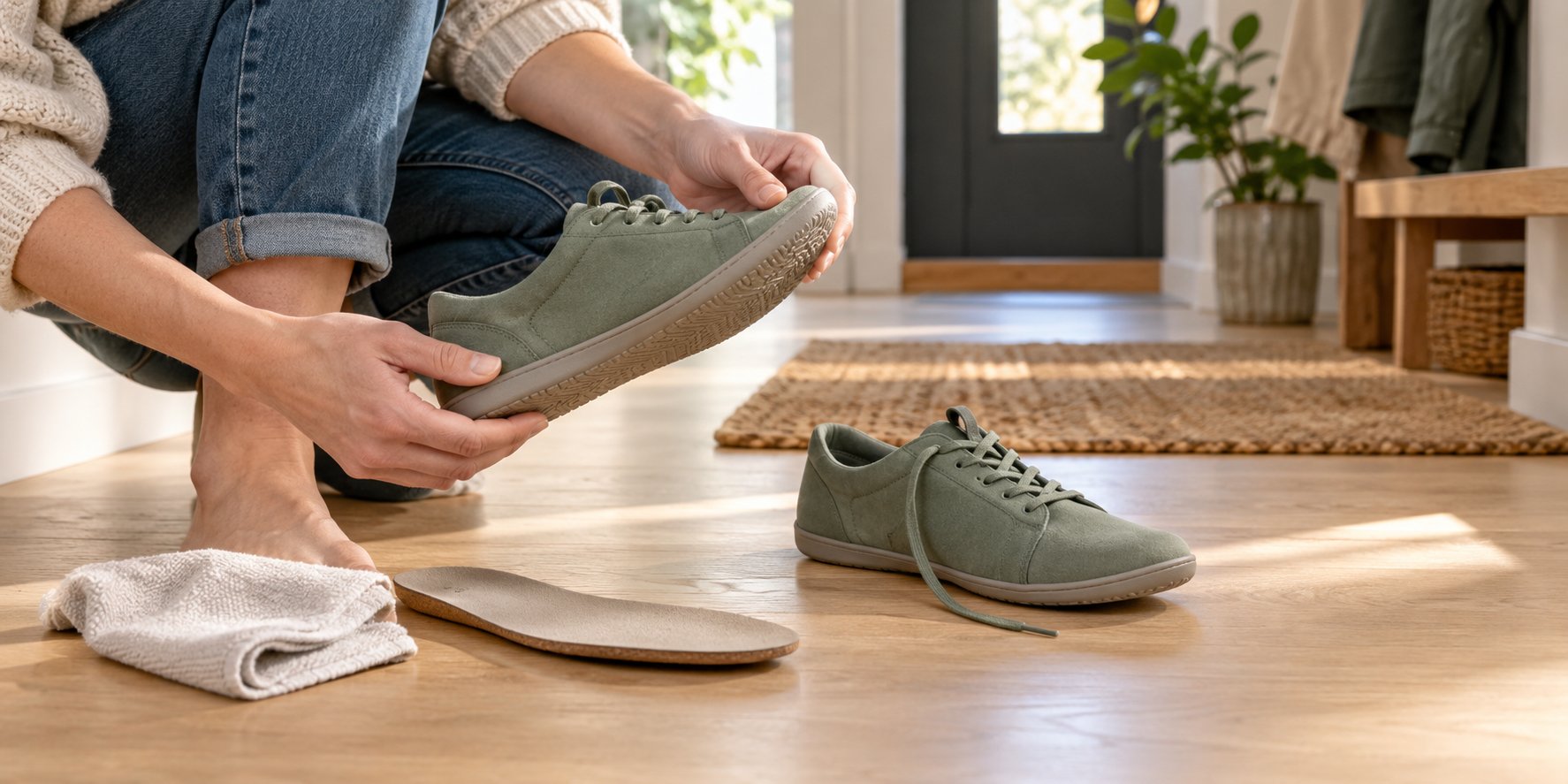
A squeak does not automatically mean your barefoot shoes are faulty. It may come from the outsole against a smooth floor, moisture inside the shoe or two parts rubbing as the shoe bends. Find the source before trying a fix.
Notice when the sound happens
- Only on tile or polished wood: compare the same steps on carpet and outdoors. The floor and outsole may be interacting.
- After rain or a long warm day: moisture can increase friction inside the shoe.
- On every surface, in one shoe: inspect the lining, seams and the join between upper and outsole.
A three minute check
- Walk on a dry hard floor, then carpet, then outside. Keep your pace similar.
- Gently flex each shoe at the toe while holding it. Listen for a squeak without walking.
- If the insole is removable, lift it out and briefly test the shoe indoors. Never peel off a fixed footbed.
Safe next steps
Open damp shoes and let them air dry away from heaters and direct heat. Wipe dirt from the outsole with a soft damp cloth, then let it dry. Avoid oils or sprays on the sole: they could affect grip. If you see separation, cracks or a persistent squeak from one shoe on every surface, contact the seller or a shoe repair professional. Avoid modifying a new pair before seeking help.
If the check shows that your shoes no longer fit, compare your foot measurements with the size chart. Antal barefoot sneakers: Amada Tea Green is one currently available option to compare for width and instep fit.