
Do leather barefoot shoes stretch with wear? What to check before sizing down
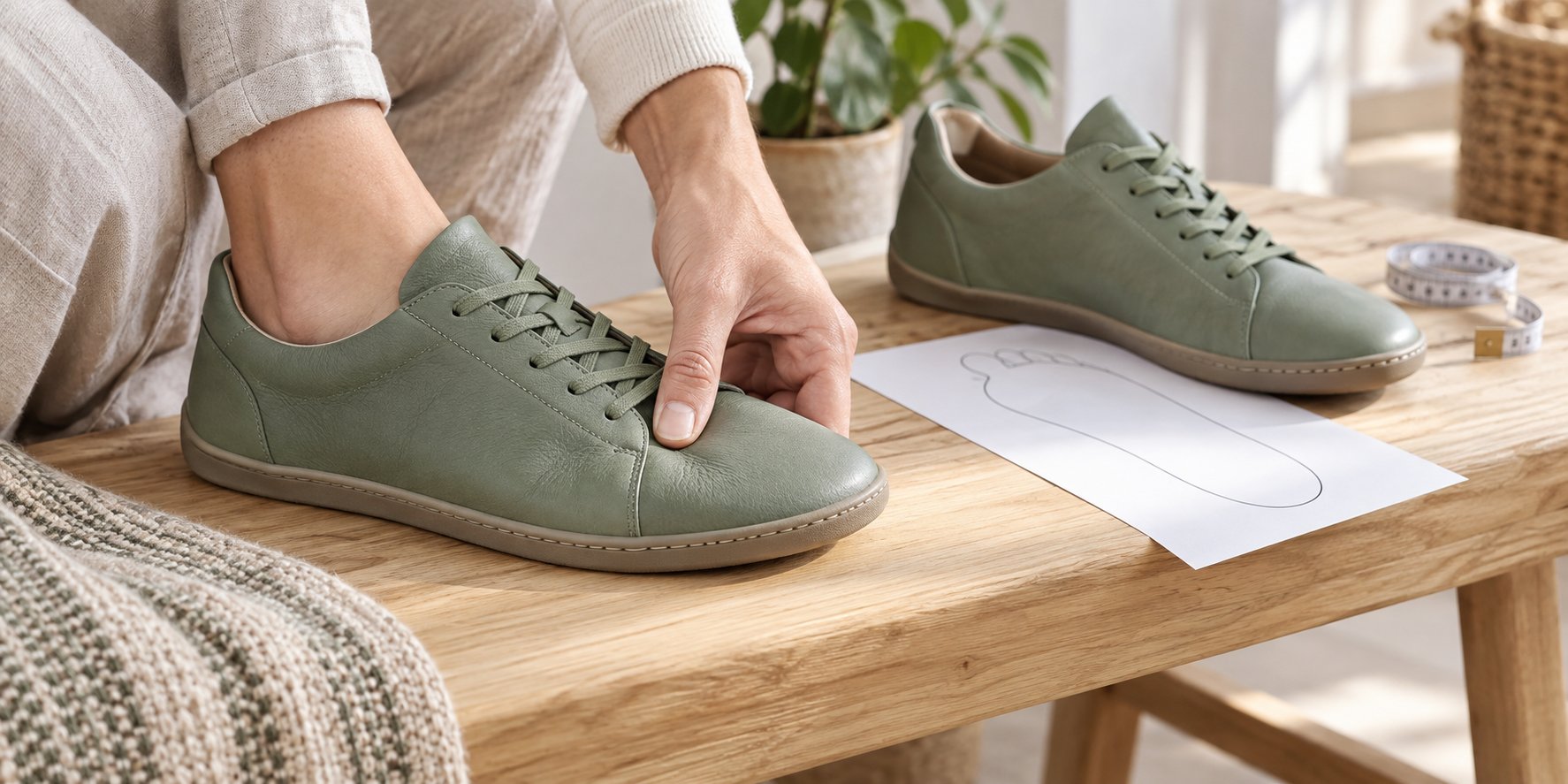
“They will stretch” is tempting advice when new shoes feel tight. A leather upper can soften and give a little where it bends. It cannot reliably add missing shoe length or change the shape of the toe box. Barefoot shoes should feel comfortable at the first indoor try-on.
What may change with wear
- Leather may ease slightly across the forefoot or instep. How much depends on the leather, lining and shoe construction, so no fixed extra width is guaranteed.
- The outsole length and toe box shape remain essentially the same. Toes should not touch the end or be squeezed together.
- Laces can adjust hold over the instep, but cannot correct a short or narrow front.
A three-step fit check
- Measure both feet while standing and compare the larger foot with the dimensions of this specific model, rather than relying on your usual size number.
- Try shoes on with the socks you plan to wear. Walk on a clean indoor floor and check toe room, side pressure and heel hold.
- If toes hit the end, pressure is strong or walking hurts, choose another size or shape instead of waiting for a break-in.
Before trying to stretch a new pair
Avoid soaking, heating or freezing new shoes. These methods can damage materials and complicate an exchange. For a worn pair with a small, local pressure point, a shoe repair professional can assess whether a modest adjustment is possible. A shoe that is short or the wrong shape calls for a different fit.
Start with the size chart. Explore Antal barefoot sneakers. Amada Tea Green has a leather upper and is currently available in several sizes. Compare the model’s dimensions and intended foot shape with your own measurements.