
Why does a flexible sole matter for everyday walking?
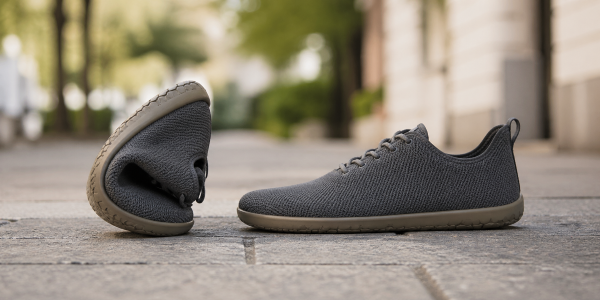
When discussing barefoot shoes, the wide toe box often gets the attention, but sole flexibility matters too. A flexible sole lets the shoe move with the foot and place less restriction on its natural rolling movement.
What happens with a stiff sole?
If a shoe barely bends, it may partly restrict foot movement. Some people initially perceive this as stable, but it can feel less natural, especially on longer walks.
What can a flexible sole offer?
A lighter-feeling step
The shoe can follow the movement of the foot more easily.
More direct ground feedback
You may feel more clearly how your foot meets the surface.
A more natural rolling movement
The foot can participate more freely in the movement.
Why does this matter in everyday life?
It is relevant beyond sport. On a daily walk, going to the shops or work, climbing stairs or running errands, it may feel more pleasant when the shoe does not act like a board under your foot.
Who might appreciate it?
People who dislike a heavy, stiff or cramped feeling and want their shoes to follow their movement rather than guide it.
For a flexible barefoot model for everyday use, explore the Barefoot trainers category.