
Barefoot shoes and the foot arch: what research actually shows
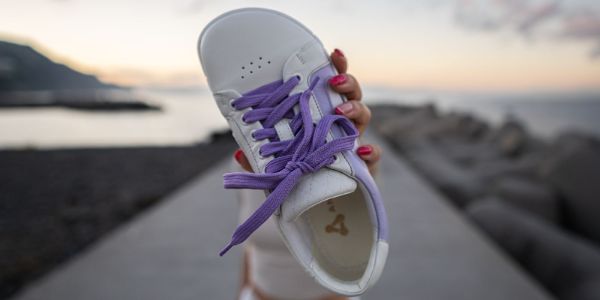
The foot arch is not a rigid curve with one correct shape. Its height and flexibility vary between people and change naturally under load. Barefoot shoes may increase demand on foot muscles, but that does not promise a higher arch, treatment of flat feet or relief from pain.
A lower arch is not automatically a disorder
Flexible flat feet are common and usually need no treatment when they cause no problems. In children, a lower arch is often part of development. Comfort, mobility, strength and pain-free walking matter more than the appearance of a footprint.
The claim that supportive shoes or insoles automatically switch muscles off like a cast is not established. Insoles can ease symptoms in some people even though they do not change foot shape. Do not stop prescribed support without individual advice.
What did minimalist-footwear studies find?
In a study of healthy adults, measured toe-flexion strength increased by an average of 57.4% after six months of daily activity in minimal footwear. A separate eight-week study of 57 runners found increases in selected foot-muscle size and strength with both minimalist-shoe walking and targeted exercises.
These findings concern muscle strength in healthy or active participants. They do not prove that barefoot shoes correct every flat foot, treat pain, change bone structure or prevent injury.
How to trial a change safely
- Begin briefly on a familiar, level surface.
- Increase time only when there is no pain during or after wear.
- Check length, width, fastening and outsole grip.
- Do not force a particular foot strike or consciously hold the arch up with every step.
For everyday use, browse ANTAL barefoot sneakers and compare the measurements of each model.
Shoes, exercises and insoles have different roles
- Exercise can target strength, mobility or coordination.
- A wider toe box may reduce toe pressure when the shoe fits.
- An insole may ease symptoms when advised for a specific problem.
- No single option is a universal treatment for every arch.
See practical examples in foot exercises for strength, mobility and balance. Follow your own plan when rehabilitation has been prescribed.
When is professional assessment appropriate?
Seek assessment for pain, stiffness, weakness or numbness, one-sided changes, an arch that drops for the first time in adulthood, repeated injuries, or difficulty with walking or balance. After injury or surgery, or with neurological, rheumatological or diabetic disease, footwear changes should be individual.
Sources: six-month minimal-footwear study; eight-week walking and exercise study; NHS — flat feet.