
Barefoot walking vs minimalist shoes: differences and choosing safely
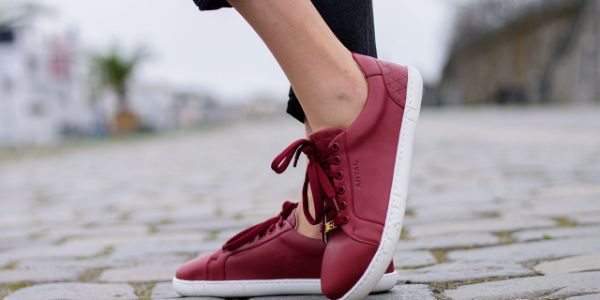
Barefoot walking places the skin directly on the ground. Minimalist shoes add protection while aiming to preserve more room and movement for the foot. Neither option automatically strengthens the arch, improves posture or resolves pain; environment, exposure and individual response matter.
The main practical differences
Bare feet receive temperature, texture and sharp-object input directly. A thin sole preserves some feedback while protecting skin from abrasion, dirt and cold. Flexibility, sole thickness, toe shape and heel hold vary between models, so the minimalist label alone does not establish function or suitability.
What research shows and where it is limited
A 2024 systematic review and meta-analysis suggested that minimalist footwear may improve toe strength, but certainty of evidence was low to very low. A review of standing balance also found major methodological differences between studies. These findings do not support promises of fall prevention, pain treatment or a universal advantage.
Choose for the surface and situation
- Go barefoot only on a clean, visible surface at a safe temperature.
- Use suitable protection in cities, cold weather, workplaces and unfamiliar terrain.
- Check toe room, heel hold and the inside of each shoe before use.
- Follow workplace, sport-facility and hygiene requirements.
When protection is needed for daily walking, compare ANTAL barefoot sneakers for the individual foot and activity.
How to trial the change gradually
- Begin with a few minutes on a familiar level surface.
- Do not change footwear, daily steps, pace and terrain at the same time.
- After each trial, check the skin, pressure areas and next-morning response.
- Extend time only when there is no pain, swelling or limp.
For a fuller framework, read how to transition to barefoot shoes. There is no mandatory timetable, and an unfamiliar sensation is not a reason to continue through pain.
When barefoot walking is a poor choice
Stop for a wound, blister, infection, sharp or worsening pain, numbness or difficulty bearing weight normally, and seek care according to severity. NIDDK advises people with diabetes not to walk barefoot even indoors because reduced sensation can hide injury. After surgery, with sensory loss or a prescribed device, discuss the plan with a clinician.
Sources / Zdroje: foot strength review; balance review; NIDDK foot safety.