
Child limping in new shoes: what to check and when to seek help
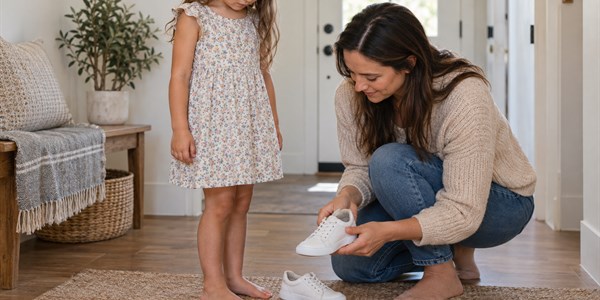
Do not assume a limp is caused only by new shoes. Pressure or rubbing can change a child’s walk, but the cause may be elsewhere. An unexplained limp should be assessed by a clinician.
What you can check safely
Have the child sit and remove the shoes. Inspect feet, socks and the inside of each shoe for a stone, folded insole, hard seam or sore spot. Ask where it hurts: the child may point to a knee or hip. Do not put a painful shoe back on.
When to get medical help
Seek urgent help if the child cannot bear weight, has sudden severe hip, knee or thigh pain, fever with feeling unwell, a visibly changed limb shape, or worsening symptoms. Contact a healthcare professional for an unexplained limp even without these signs. The NHS guidance on limping in children explains warning signs.
Only when footwear is identified as the problem should you recheck the size table and toe-box shape. New shoes should feel comfortable during the first fitting.