
Children’s sandals: open or closed toes, straps and soles
When choosing children’s sandals for summer, check toe room, how securely they hold the foot and comfort during movement. Try the sandals on both feet rather than relying only on the size label.
Open or closed toes?
An open toe leaves the toes uncovered and allows direct ventilation, but the surface and type of play matter too. The foot should not slide forward so far that the toes extend beyond the edge. A closed toe adds coverage, which can be useful on a playground or around small stones.
With either design, check the width, shape and space above the toes. A closed front must not press on them; an open front is no reason to choose a sole that is too short.
Fastenings and fit
Adjustable straps should hold the foot without noticeable slipping or tightness. Separate adjustment at the front and around the ankle can make it easier to fit the individual foot. Hook-and-loop fastenings are often practical for independent dressing; with buckles and quick-lacing systems, check for pressure and contact with the skin. No fastening type alone guarantees that footwear will not rub.
Soles and surfaces
The sole should allow comfortable movement and suit the planned activity. Check how it bends at the front, the condition of the tread and how your child moves in the sandals. A fine tread alone cannot guarantee grip on wet paving or smooth stone. If a nursery or sports hall requires non-marking soles, check the label on the particular model.
For longer outings or rocky terrain, choose footwear for the route. Our article on choosing shoes for hiking with children can help.
Socks with sandals?
It depends on your child’s comfort and the sandal’s construction. For longer wear, thin moisture-wicking sports socks or a suitable merino blend may work well. Socks should not bunch up or make the footwear too tight. When sandals are worn without socks, keep an eye on the skin beneath the straps; if there is burning, redness or rubbing, check the adjustment and whether the pair is suitable.
Trying sandals on and choosing a size
Measure both feet and compare them with the model’s internal dimensions. Assess the extra room alongside the width and how securely the heel is held.
Have your child stand, walk and, according to their abilities, try squatting, changing direction or making a few small hops. Check that no strap presses on the toes or the side of the foot and that the foot does not slide forward. Try the sandals with socks too if your child plans to wear them.
Common mistakes when choosing sandals
- Choosing a sandal that is too long because the smaller size is narrow; a different shape or width may be more suitable.
- Judging a sole only by its appearance without considering the surface and activity.
- Checking the fastening only while standing and missing pressure during squatting or walking.
Frequently asked questions
Are flip-flops suitable for children?
They can be useful for short trips near water if they fit your child. For longer walks and active play, choose footwear that stays securely on the foot and suits the activity.
Are sandals suitable for cycling?
For cycling, choose closed shoes that stay securely on the feet. MedlinePlus advises children not to ride in sandals, flip-flops or barefoot. Secure laces and loose straps so they cannot get caught in the chain or wheel.
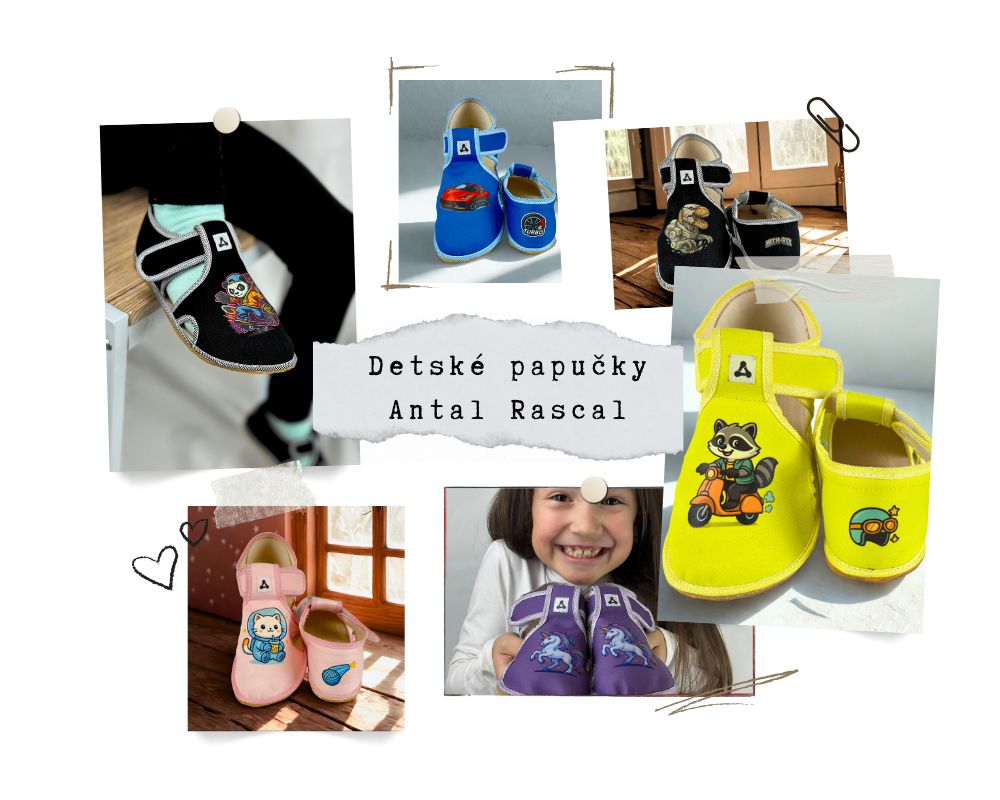
Shape, adjustment and intended use should guide your choice. If you need footwear for changing into indoors, browse ANTAL children’s slippers and choose according to your child’s foot measurements and needs.
Reference sources: Dorset HealthCare NHS – choosing footwear for children; NHS – shoes, socks and blisters; MedlinePlus – footwear and cycling safety.