
Heel valgus and knock knees in children: what to watch for

Heel valgus and knock knees are not the same thing. With a valgus heel, the heel tilts outwards from the line of the lower leg when viewed from behind. This may occur with a lower arch and the appearance of an ankle leaning inwards. With knock knees, the knees come closer together while a gap remains between the ankles. Appearance alone does not tell you whether a child needs treatment.
How leg alignment develops
Leg alignment changes in early childhood. After a bow-legged phase, knock knees are usually most noticeable at around three to four years of age. Alignment then gradually changes as the child grows. A painless flexible flatfoot can also be a normal variation. Heels and knees should nevertheless be assessed separately, alongside the child's age, symmetry and movement.
What to observe at home
- Symmetry: does one side look or move noticeably differently?
- Heels and walking: is the alignment or way the foot lands changing over time?
- Comfort: does pain or unusual tiredness occur during everyday activity?
- Taking part in play: is there more tripping, limping or reluctance to run?
Watch natural walking and everyday play rather than forcing a “correct” stance. Squats or jumps should only form part of safe activities suited to your child's abilities; stop if they hurt. A photograph or a test at home cannot replace an examination. Our article on pronation and supination in children explains the difference between foot position and movement.
Movement and shoes for comfortable activity
Playing on a variety of safe surfaces can add variety to movement. Going barefoot is an option in a clean, warm and safe place if your child finds it comfortable and has not been advised to avoid it. It is not a treatment for heel or knee alignment.
Choose shoes according to length, width, toe space and how securely they stay on the foot. Consider flexibility and support alongside the activity and your child's comfort. A firmer reinforcement does not, by itself, mean that muscles will weaken, nor does it automatically correct alignment. Do not change a prescribed aid without consulting the relevant professional.
When to seek professional advice
Contact your child's doctor if alignment is getting worse, or if there is pain, stiffness, swelling, marked asymmetry, limping or reluctance to move. Development that seems unusual for their age or a parent's continuing concern also deserves discussion. The doctor can assess whether observation is enough or whether an orthopaedic assessment or physiotherapy is needed.
Seek urgent medical assessment if your child cannot put weight on the leg, has severe or rapidly worsening pain, has a visible deformity after an injury, or has a fever and feels generally unwell.
Frequently asked questions
Can insoles help “straighten” the legs?
They may ease symptoms in some painful conditions, but they are not automatically needed for a painless flexible flatfoot. They do not guarantee a change in the arch or straightening of the knees. The choice should be based on an examination; our article on orthopaedic shoes for children explains more.
Is valgus alignment always a problem?
No. Some differences are part of development or a painless variation. Age, the degree of alignment, symmetry, any pain and function matter more than the label “valgus” alone.
Which sports are suitable?
Cycling, swimming, playground games or walks can be chosen according to your child's age, interests and abilities. Stop the activity if it causes pain and seek advice. Normal developmental knock knees alone do not require a ban on sport or special exercises to straighten the legs.
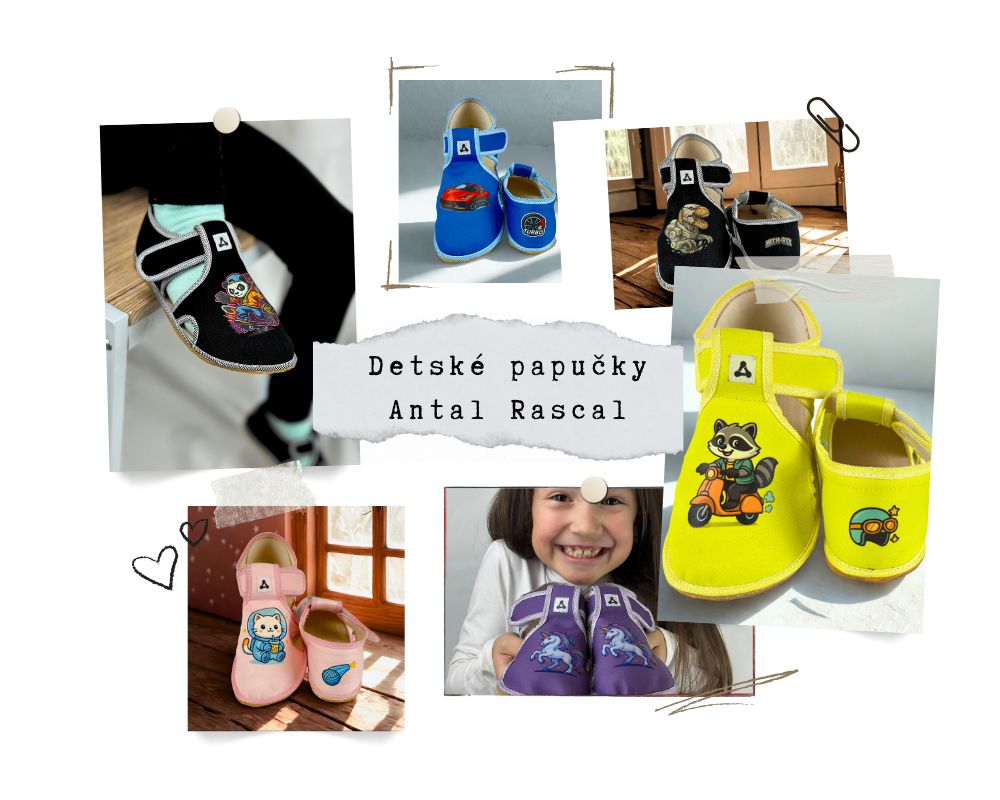
Watch your child's comfort and changes over time. For everyday indoor footwear, you can look at ANTAL children's slippers and compare their measurements with your child's feet. If treatment has been recommended, follow the professional's instructions.
Medical sources: Nottingham University Hospitals – flatfoot and heel alignment; NHS inform – the development of bow legs and knock knees; AAOS – flexible flatfoot in children; NHS – limping and urgent symptoms.