
Pronation and supination in children: what to notice and when to seek advice

Looking at their child’s feet, parents may notice ankles leaning inwards or more weight being placed along the outer edge of the foot. Appearance alone does not establish a diagnosis. What matters is whether your child moves comfortably, manages everyday play and shows any change in the way they walk.
What do pronation and supination mean?
Pronation refers to an inward movement of the foot, and supination to an outward movement. Both are part of how the foot works during walking and adapts to the surface underfoot. A visible ankle tilt or weight on the outer edge does not by itself show whether a child needs treatment. A professional assesses the range of movement and any symptoms in their wider context.
Observe at home without making a diagnosis
On a flat, clear surface, watch natural walking, differences between the two sides, limping and tiredness. Your child can wear their usual shoes or walk barefoot briefly if the surface is clean, warm and safe and they have not been advised against it. Try squatting or side steps only as play suited to their age and abilities; stop if there is pain or unsteadiness.
Sole wear is useful information, but wear along the inner or outer edge cannot reliably identify pronation or supination. Even a pain-free squat does not replace an assessment. You can bring regularly worn shoes and a brief record of symptoms to an appointment.
What is common, and when should you pay attention?
Low arches and a pronated foot posture are common in young children. Painless flexible flatfoot does not usually need treatment simply because of its appearance. This does not mean, however, that every change in alignment or habit of walking on the outer edge can be put down to growth.
Contact your child’s doctor for pain in the foot, ankle, knee or hip, marked asymmetry, stiffness, worsening walking, repeated injuries or limitations during play. If falls are frequent, our article on why children trip and what to look out for may also help.
Seek urgent medical assessment if your child cannot put weight on the leg, has severe or rapidly worsening pain, has a deformity after an injury, or has a fever and feels generally unwell.
Comfortable shoes and safe movement
Consider length, width, space above the toes, heel hold and fastenings. Shoes should allow comfortable movement and suit the activity. Assess sole flexibility alongside how your child walks in that pair.
Balance can be practised through games such as walking along a line or standing on one leg, with support available and adult supervision. Choose low, stable obstacles to suit your child’s abilities. Grass, sand or carpet can add variety to play if they are safe. Going barefoot is an option, not a treatment for pronation or supination. If there are difficulties, follow a physiotherapist’s individual advice.
Common misconceptions when choosing shoes
- A firm heel counter is neither automatically harmful nor necessary for every child. Support may be part of advice for particular symptoms; it does not alone determine whether a shoe is suitable.
- Do not make up for insufficient width with unnecessary length. If a pair presses at the sides, look for a more suitable shape and check that an oversized shoe does not slip.
- Stiffness and weight do not guarantee stability. However, do not change prescribed footwear or an aid without consulting the professional who recommended it.
Frequently asked questions
Can orthotic insoles help?
They may ease symptoms in some painful conditions, but they are not automatically needed for painless flexible flatfoot. The choice depends on an assessment. Insoles do not guarantee a change in arch shape and do not always need to be custom-made. Our article on orthopaedic shoes for children explains the wider context.
Can pronation or supination be “trained away”?
Games can develop balance and movement skills, but cannot guarantee a change in foot posture. Targeted exercises should be based on your child’s needs, particularly if there is pain or a limitation in function.
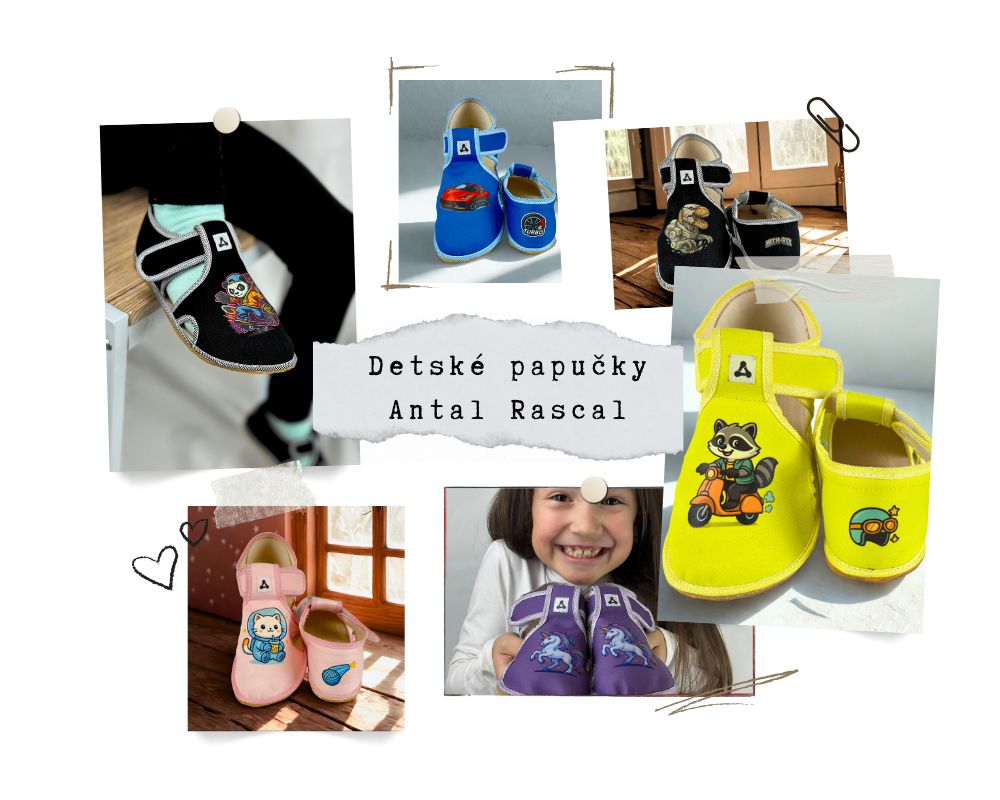
Focus on comfort and function, not a perfect footprint. For everyday indoor footwear, you can explore ANTAL children’s slippers and compare their dimensions with your child’s feet. This choice does not replace recommended treatment.
Medical sources: NHS Wales – children’s feet and ankles; AAOS – flexible flatfoot in children; NHS Greater Glasgow and Clyde – flat feet; NHS Wales – choosing children’s footwear; NHS – limping and urgent symptoms.