
How to protect leather shoes from winter road salt
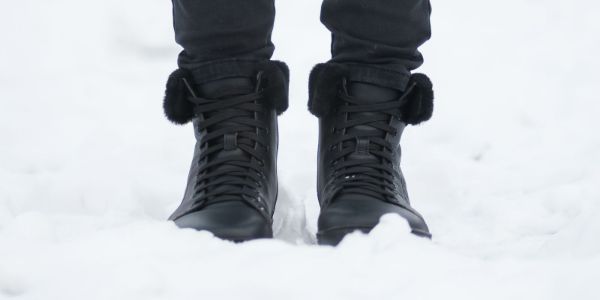
Road salt reaches the upper, seams and sole edge with melting snow. After drying, it may leave a white residue, and repeated exposure can dry or alter the appearance of leather. Early removal, a product suitable for the material and slow drying provide the best protection.
Prevention before the first wear
Identify whether the upper is smooth leather, suede or nubuck, textile or a combination. A protector must be suitable for that material and should first be tested on an inconspicuous area. Treatment may slow the entry of moisture and dirt, but it cannot make every shoe waterproof.
What to do after a salty winter walk
- Remove loose dirt and salt with a soft, slightly damp cloth before they dry completely.
- Do not soak the whole shoe or use a strong cleaner without checking compatibility.
- Remove the insole only if it is removable, and loosen laces or fastenings.
- Dry at room temperature, away from radiators, tumble dryers and direct hot air.
Dealing with dried white residue
First lift loose crystals gently with a brush intended for that surface. Clean the remainder according to the material and product instructions, working on small areas without hard rubbing. Homemade acidic or alkaline mixtures may change colour or finish, so do not use them without explicit material guidance.

Conditioning and regular checks
- Once fully dry, apply only a care product intended for that leather and follow its dosage.
- Check seams, joins, the sole edge, cracks and colour changes.
- Rotate pairs so that shoes have time to dry between wears.
- For permanent damage, separation or a deep crack, consider professional repair.
For cold weather, compare ANTAL winter barefoot shoes. Our general guide explains cleaning, protection and maintenance for barefoot shoes.
Safe cleaning is gentle and gradual
Leather is sensitive to soaking, heat and unsuitable chemicals. A protector does not replace cleaning, and a cleaner does not replace conditioning. Follow the instructions for the shoe and product, ventilate the area and keep cleaning products away from children.
Sources: Canadian Conservation Institute – leather care; US National Park Service – conserving leather objects; US EPA Safer Choice – choosing safer cleaning products.