
Why start walking in barefoot shoes and how to progress
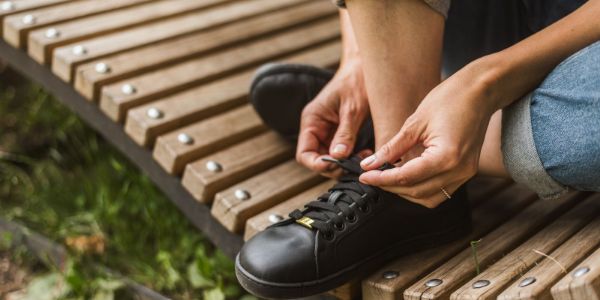
Barefoot shoes may provide more toe room, a smaller heel-to-toe height difference and a stronger sense of the ground. This does not mean they automatically strengthen the arch, correct posture or prevent injury. A transition changes loading and is worthwhile only when the particular pair fits well and suits the activity.
Why someone may want to try barefoot shoes
Some people value the roomier toe area, flexibility and lighter feel. Research shows biomechanical differences between barefoot and shod walking, but those differences alone do not prove a health benefit for everyone. A systematic review of transitions to minimalist running footwear also found no single standard protocol. Evidence from running cannot be applied directly to everyday walking, but it supports a cautious, gradual approach.
What to check before the first day
- Measure both feet and check toe room, heel hold and fastening.
- Choose the model for the surface, weather, workplace rules and planned activity.
- Begin on a short familiar route and keep a proven alternative pair available.
- Do not change footwear, foot-strike technique, route length, pace and terrain all at once.
Let your response guide the first weeks
There is no universal number of minutes or weeks. Start with a short section of ordinary walking, then monitor how you feel during the activity and the following day. If walking remains comfortable and no new symptoms appear, add only one variable at a time, such as time or surface difficulty. CDC guidance for physical activity recommends starting with a smaller amount and increasing gradually. Do not force a forefoot strike or any other supposedly correct technique.
When to slow down or stop the transition
- An unfamiliar feeling is not a reason to push through sharp, increasing or one-sided pain.
- Stop if a blister, wound, swelling, new limp or instability develops.
- Persistent problems, recovery after injury or a marked gait change need professional assessment.
- If you have diabetes, reduced sensation or poor circulation, discuss footwear with a doctor or podiatrist.
Browse ANTAL barefoot sneakers for a first pair. You can also follow our detailed guide to getting used to barefoot shoes gradually.
A realistic goal is comfortable, safe walking
Not everyone needs to switch completely, and barefoot shoes need not be used for every activity. Alternating footwear may also be suitable. NIDDK advises people with diabetic neuropathy to check their feet regularly and seek professional care for problems. The goal is therefore not to tolerate the thinnest possible sole, but to find footwear and a level of activity you can manage without wounds, pain or reduced stability.
Sources: PubMed – transition to minimal footwear review; US Physical Activity Guidelines; NIDDK – peripheral neuropathy and foot care.