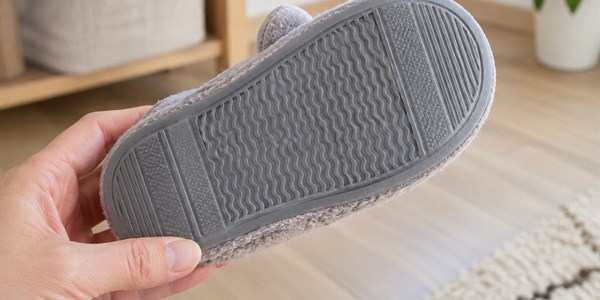
Children’s slippers slipping on floors: what to check on the sole
If children’s slippers slip, first note which surface causes it. A sole can behave differently on dry timber and wet tiles. No shoe guarantees grip in every condition. Four things...
We use cookies to make browsing our website comfortable and, through analysis, continuously improve its features, performance and usability. More information

If children’s slippers slip, first note which surface causes it. A sole can behave differently on dry timber and wet tiles. No shoe guarantees grip in every condition. Four things...

The better heel shape depends on where the child wears the slipper and how it stays on during movement. An open heel can be easy to slip on; a closed heel wraps around the back of ...

A fastening should keep the slipper on the foot and be manageable for the child who wears it. This matters at nursery, where children are often asked to change shoes themselves. W...

Arch support is not automatically needed in every child’s indoor slipper. If a clinician has recommended it, ask which particular issue it addresses and how the support should be u...
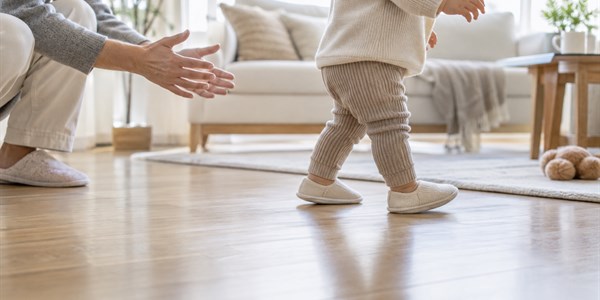
Try new children’s slippers on a clean indoor floor as soon as they arrive. Use the socks your child wears to nursery or school. Sitting still for a moment will not show how the pa...
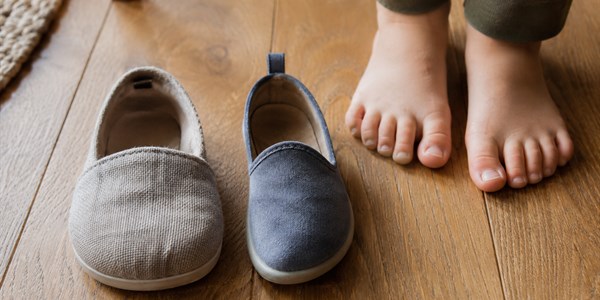
Correct shoe length does not always mean free toes. A tapered toe box can press on the big or little toe even when there is enough length beyond the longest toe. Look at the foot ...

A slipper that slides off the heel can make a child grip it with their toes. A narrow heel needs a shape that holds the back of the foot while allowing enough room at the front. T...

If a slipper presses on the top of a child’s foot, a larger size may not solve it. The length could be correct while the upper leaves too little room for a high instep. Try this f...

The right length does not guarantee that a child’s slipper fits a wide foot. The toe box may squeeze the big or little toe while leaving space in front. Width, shape and heel hold ...

Barefoot footwear aims to reduce how much a shoe directs foot movement. It typically combines a wide toe box, a thin flexible sole and little or no height difference from heel to t...

Footwear history does not follow one simple line. Organic materials rarely survive, so archaeology preserves only part of the story. Finds nevertheless show people protecting their...

Barefoot-style shoes may offer more toe room, a smaller heel-to-toe difference and a thinner, more flexible sole. These features also change the load on the foot and calf, so a gra...
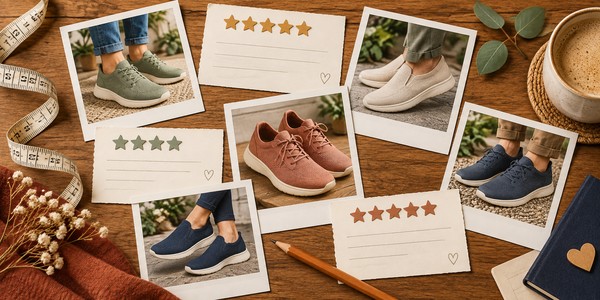
Customer feedback helps us improve fit, materials and service. These experiences retain the specific measurements and sizes provided, while describing the personal impressions of i...

Presenter and influencer Iveta Kořínková describes her personal route to barefoot footwear and her collaboration with ANTAL. She talks about comfort, nature, design and the value o...
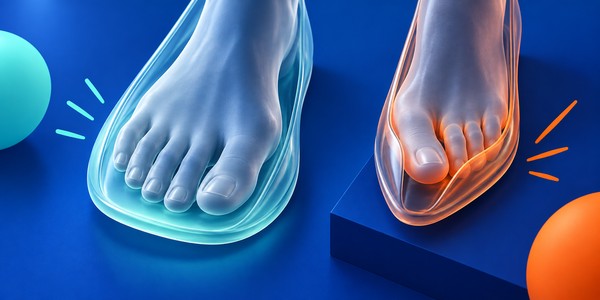
Not every conventional shoe is harmful, and barefoot footwear is not automatically right for everyone. Size, width, shape, comfort, intended use and a person’s health all matter. ...
Back pain is common and may involve muscles, joints, nerves, injury or another health condition. Footwear type alone rarely explains every symptom. Barefoot shoes are not a treatme...

Hallux valgus, commonly called a bunion, changes the position of the big toe and first metatarsophalangeal joint. Some people notice only a bump; others experience pressure, rubbin...
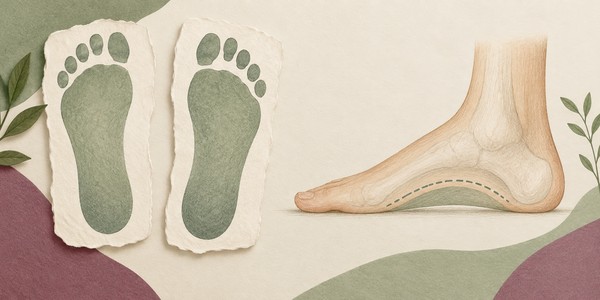
Flat feet describe a low or absent longitudinal arch while standing. Many people have no pain or limitation and need no treatment. Symptoms, foot function and whether the change ap...
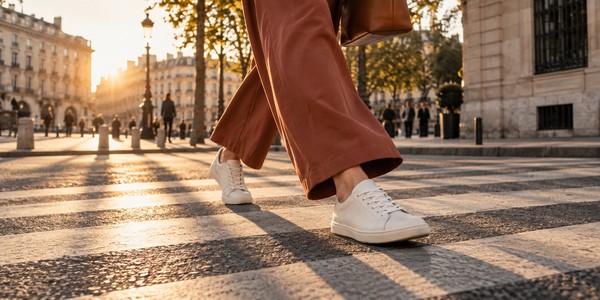
ANTAL Amada is an elegant leather barefoot sneaker designed mainly for everyday city wear. It combines a clean silhouette with an anatomically shaped toe box, a flexible sole and n...

ANTAL Aire are lightweight urban barefoot sneakers for everyday wear. They combine leather and breathable textile sections with an anatomical toe box and flexible sole. Before choo...